
Our Recommendation
Noora Health is a high‑impact, rigorously evaluated caregiver‑training organization that has demonstrated substantial reductions in complications, readmissions, and neonatal mortality across large hospital cohorts using quasi‑experimental designs. For funders focused on maternal, newborn, and surgical safety in South Asia and Southeast Asia, and on “bending the curve” on preventable complications through low‑cost, scalable behavior change, Noora Health is a very strong candidate, with an evidence base that already includes multiple controlled studies and strong system‑level partnerships.
Noora Health's Fierce Certification score is 120/100 based on our criteria:
✔ Has Ultimate Outcome Goals (50 pts)
✔ Measures Intermediate Outcomes (10 pts)
✔ Measures Ultimate Outcomes (15 pts)
✔ Shows Continual Learning & Adaptation (25 pts)
✔ Measures Intermediate Counterfactual (10 pts)
✔ Measures Ultimate Counterfactual (10 pts)
The Social Problem
Noora Health addresses preventable complications, readmissions, and deaths that occur when patients and families leave hospitals without the knowledge or support needed to provide safe care at home. In overstretched public health systems across India, Bangladesh, Indonesia, and Nepal, nurses and doctors lack time to provide comprehensive education, and families often do not know how to recognize danger signs, maintain hygiene, feed newborns, or manage post‑surgical recovery, leading to avoidable harm and high costs. This gap is particularly acute for low‑income patients in public facilities, who have the fewest resources to absorb complications and readmissions.
The Solution
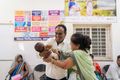
Noora Health’s core solution is the Care Companion Program (CCP), which trains nurses and doctors via Training of Trainers (ToT) to deliver structured, culturally tailored education to patients and their families before and after discharge. Using group classes, bedside counseling, visual aids, and, increasingly, mobile‑based follow‑up, CCP equips caregivers with practical skills in areas like newborn care, maternal recovery, post‑operative care, and chronic disease management. The theory of change is straightforward: when informed, confident caregivers adopt evidence‑based home‑care behaviors and recognize danger signs early, complications and readmissions fall, and mortality declines, while health systems become more efficient and humane.
Key Outputs
Key outputs that contextualize the model:
- Caregivers trained: more than 2 million caregivers trained across 329+ facilities by early 2023; by 2025, Noora reports equipping over 26.5 million caregivers and patients across four countries with essential caregiving skills.
- Facility and geographic scale: CCP embedded in 300+ public and mission facilities across six Indian states and Bangladesh, with expansion to Indonesia and Nepal.
- Mobile reach: the Mobile Care Companion chat program has reached around 2 million subscribers across 13 languages, extending support into the home.
- Program evolution: ongoing revisions of CCP based on national focus groups, needs assessments, and service‑design prototyping, including a revised theory of change for Indonesia and a design‑research review of the maternal and neonatal CCP.
These outputs show a combination of depth (structured curricula and high‑touch training) and breadth (tens of millions reached through facility and mobile channels).
Key Intermediate Outcomes
Intermediate outcomes with measurement:
- Behavior change: across multiple studies, CCP significantly increases adoption of key behaviors such as exclusive breastfeeding, appropriate burping, skin‑to‑skin care, cord care, and recognition of danger signs.
- Caregiver confidence and anxiety: evaluations report reduced anxiety and higher confidence among caregivers who receive CCP training compared to pre‑training or standard‑of‑care comparators.
- Knowledge and engagement: caregivers show higher knowledge scores on essential care practices after training and engage in structured sessions at high rates across participating facilities.
Some of these intermediates, especially behavior adoption, are evaluated through quasi‑experimental comparisons between CCP and standard‑of‑care groups, while others rely more on pre‑post within CCP cohorts.
Key Ultimate Outcomes
Ultimate outcomes with measured impact:
- Complications: a cardiac‑surgery study found complications reduced from 34.4% in the control group to 14.5% in the intervention group, a 71% adjusted odds reduction; maternal complications decreased by 12% and neonatal complications by 16% in other cohorts.
- Readmissions: newborn readmissions fell by 56% for families receiving CCP training, and COVID‑19 teletraining participants had 48% lower likelihood of hospitalization than those receiving standard care.
- Neonatal mortality: impact materials report an 18% reduction in neonatal mortality in one evaluated study and a 78% reduction in a more recent context, both comparing CCP cohorts to controls.
These results provide strong quasi‑experimental counterfactual evidence that equipping caregivers can significantly reduce hospital‑associated complications, readmissions, and neonatal deaths at meaningful scale.
Continual Learning & Adaptation
Noora Health demonstrates a strong learning orientation:
- It has developed and iteratively refined its Theory of Change in collaboration with governments (for example, crafting a revised ToC for Indonesia based on national focus groups, needs assessments, and implementation learnings).
- It uses service design and prototyping (e.g., service walkthroughs, design‑research reviews of maternal and neonatal CCP) to identify weak points in the caregiver journey and adjust curricula, tools, and delivery accordingly.
- It publishes regular impact reports, invests in quasi‑experimental and pre‑post evaluations across condition areas, and now collaborates with WHO to strengthen support for caregivers globally, indicating that evidence is feeding into both internal decisions and global guidance.
This pattern aligns closely with our four‑step cycle: a ToC anchored in specific negative consequences (complications, readmissions, neonatal deaths), an intervention tightly mapped to those consequences, serious measurement at both intermediate and ultimate levels, and clear feedback loops into program and system design.
Written by