
Our Recommendation
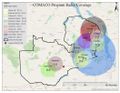
COMACO (Community Markets for Conservation) is one of the most sophisticated and rigorously evaluated integrated conservation-development enterprises in Africa. Its model is genuinely distinctive. Rather than choosing between conservation and poverty alleviation, COMACO has built a self-reinforcing loop in which market incentives drive conservation compliance, conservation compliance improves soil and ecosystem health, ecosystem health improves farming productivity, and improved productivity deepens farmer commitment to conservation. Over 23 years of operation across nearly a quarter of Zambia, now reaching 472,804 farmers, or roughly 340,000 household families across 84 chiefdoms, COMACO has produced some of the most compelling evidence in the conservation-development field.
The evidence base includes a PNAS (Proceedings of the National Academy of Sciences) published, peer-reviewed study directly comparing COMACO and non-COMACO areas, showing stabilized wildlife populations and improved farmer welfare in COMACO areas while comparable non-COMACO areas continued to decline. Carbon emissions reductions (3 million tons cumulative) have been independently verified by AENOR under the Reducing Emissions from Deforestation and Forest Degradation (REDD+) methodology. Annual household surveys consistently document a 45% household income increase, 76% food security, and 61% of regenerative-farming mothers reporting improved child health. Perhaps most strikingly, the cost per household sustained by the model has fallen from over $25 to $7.20, a very powerful indicator of both learning-driven efficiency improvement and the commercial viability of the It's Wild! product revenue model.
COMACO's Fierce Certification score is 80/100 points based on our criteria:
✔ Has Ultimate Outcome Goals (20 pts)
✔ Measures Intermediate Outcomes (15 pts)
◪ Measures Ultimate Outcomes (10 pts)
◪ Measures Intermediate and/or Ultimate Counterfactual (10 pts)
✔ Shows Continual Learning & Adaptation (25 pts)
The Social Problem
Across the Luangwa Valley and surrounding landscapes of rural Zambia, a cycle of poverty and ecological destruction has persisted for decades. Small-scale farming households, most of them women, farm degraded soils with declining yields, earning too little to meet their families' basic needs. Faced with hunger and poverty, they turn to the resources still available to them, the forests, the wildlife, the charcoal that can be made from trees and sold to urban buyers. These coping strategies are rational responses to extreme poverty, but they accelerate the destruction of the very ecosystem that farming depends on. Deforestation strips watershed capacity, soil erosion compounds yield decline, and poaching depletes wildlife.
For decades, conservation organizations tried to stop this by protecting parks and prosecuting poachers. Development organizations tried to break the poverty cycle by providing inputs, training, or credit. Neither worked sustainably in isolation, because neither addressed the core problem. Farming in these landscapes produces too little income and too little food to make conservation a rational choice for the households living within it. COMACO was built on the recognition that conservation can only succeed at landscape scale when the people whose daily decisions shape that landscape have a better economic alternative.
The Solution
COMACO (Community Markets for Conservation) is a social enterprise that links farm markets and manufacturing to conservation incentives at landscape scale. Its model has three interdependent components that reinforce each other.
- A market-based incentive system. COMACO purchases crops directly from farmers at premium prices compared to available alternatives, but only from farmers whose cooperatives meet conservation compliance standards. These standards include minimum tillage, crop rotation, agroforestry practices, no burning, and fire break management. Farmers who comply receive access to COMACO's markets, seeds, training, and the ecosystem service payments (Conservation Dividends) generated by the REDD+ carbon project. Those who do not comply lose these market advantages. This creates a direct financial incentive for conservation-compatible behavior.
- A manufacturing and brand system. COMACO transforms the crops it purchases into finished food products under the It's Wild! brand including peanut butter, soy pieces, soybean oil, rice, honey, and animal feed, and sells them in Zambian retail markets and internationally. Revenues from It's Wild! sales fund a growing share of COMACO's farmer support operations, reducing dependence on donor funding and creating a commercially sustainable engine for conservation. The It's Wild! brand has 19 products and a retail value exceeding $10 million annually.
- The third is a community governance system. COMACO organizes farmers into cooperatives (112 established, representing over 335,230 families) that provide local extension services, manage community seed banks, conduct crop buying, and oversee conservation compliance. Traditional leaders, chiefs and headmen, sign collective agreements to enforce conservation regulations within their chiefdoms, and receive Conservation Dividend payments when their communities comply. This embeds conservation incentives in existing governance structures rather than imposing external enforcement.
Key Outputs
From their 2025 Annual Report and 2021 Results Booklet:
- 472,804 farmers organized into 112 cooperatives across 84 chiefdoms
- 340,000+ household families reached (target: 400,000 by end of 2026)
- 84 chiefdoms covering approximately a quarter of Zambia (14.6 million hectares)
- 244,639,691 surviving Gliricidia sepium trees on farm plots across 122,320 hectares
- 1,726,760 hectares of community-managed forests established
- 9,250 metric tons of farm commodities purchased from 42,927 farmers in 2025; $4.5M returned to communities
- 45,450 beehives installed; 9,128 farmers supported with honey income; honey exported to UK (Lush) and USA
- 97,463 fuel-efficient cookstoves installed saving an estimated 3,118,816 trees
- 2,102 poachers transitioned to farming and alternative livelihoods; 80,623 snares and 1,996 firearms surrendered
- 2,800 solar-powered radios distributed; Farm Talk radio program broadcasting from 11 stations to an estimated 2.1 million rural listeners twice weekly
- 3,002,924 tonnes of CO2 equivalent reductions achieved (2017–2019 monitoring period); REDD+ credits verified by AENOR
- $7.20 annual cost per household (down from $25+ at founding)
- It's Wild! product retail value: $10.2 million annually
- 19 It's Wild! products currently on market
Key Intermediate Outcomes
COMACO's intermediate outcome evidence is among the strongest of any conservation-development organization operating in Africa.
- Household income: A 45% increase in annual household income was documented from 2019 (ZMW 5,070) to 2020 (ZMW 7,367). A two-fold increase in alternative livelihood income from dry-season activities has been documented in more recent surveys. The PNAS study independently confirmed increased incomes for COMACO participants compared to non-participants.
- Food security: 76% of COMACO households are food secure, that is, having sufficient food until the next harvest (2021 data). 86% of COMACO farmers now grow more than three major food crops, indicating dietary diversification that reduces vulnerability to single-crop failure.
- Deforestation reduction: The annual deforestation rate in COMACO community conservation areas has been reduced from 3% to 2.1% documented over multiple years of monitoring and verified through the REDD+ accounting system. The first REDD+ monitoring period (57 chiefdoms) recorded 228,000 tons of CO2 reductions; cumulative reductions have reached 3,002,924 tons across the 2017–2019 monitoring period alone.
- Wildlife population stabilization: The published PNAS study (Lewis et al., 2011) is the most rigorous external evaluation of COMACO's conservation outcomes. It documented stabilized wildlife populations in COMACO-supported areas of the Luangwa Valley Game Management Area, while non-COMACO areas in the same landscape continued to decline. This is a direct geographic comparison at the same time period and the strongest counterfactual design in COMACO's published evidence.
- Soil health and crop diversification: 244,639,691 Gliricidia trees survive in farm plots today, with 79% of farmers now compliant with agroforestry-based regenerative farming practices. Crops grown with regenerative methods show a 35% increase in mineral content compared to conventionally farmed crops. Farmers save K3,500 per hectare annually on chemical fertilizer costs.
- Alternative livelihoods and market access: $4.5 million returned to communities from crop sales in 2025, with 9,250 metric tons purchased at 193 bulking points. A two-fold increase in alternative livelihood income from dry-season sources (learned through COMACO) was documented in 2025 surveys. 2,102 former poachers have transitioned to legal livelihoods.
Key Ultimate Outcomes
COMACO's ultimate outcome evidence revolves around child health. The 2025 Annual Report's annual survey mentions that 61% of 965 interviewed mothers who had adopted regenerative farming practices reported a marked reduction in their children getting sick. This is directly linked to the 35% increase in mineral content of regeneratively farmed crops, an explicit comparison to conventional farming methods. Additionally, 605,000 children are fed daily through school feeding partnerships using COMACO's It's Wild! Yummy Soy, with documented improvements in school attendance in those programs.
Continual Learning & Adaptation
COMACO's homepage states directly that its evidence commitment stems from needing to "assess COMACO's cause and effect relationships between improved livelihoods and conservation and the many other factors that come into play," and that its research team "maintains an annual program of monitoring and data analysis to test the strength of these relationships and identify weaknesses where improvements to the model can be found."
The most visible indicator of learning-driven adaptation is the cost per household metric: $25+ when COMACO started, $7.20 today. This dramatic reduction reflects continuous refinement of how farmer extension is delivered. The shift from external trainers to cooperative-based local trainers reduced costs while improving reach. The introduction of digital tools (the Crop Buying mobile app, the Land Management Data System) are explicitly documented as saving $47,800 annually and improving quality (crop meeting quality standards: 67% before app to 82% after).
Specific learning-driven program additions documented over time. Cookstoves added when evidence showed their dual benefit for trees and respiratory health. Beehives added when evidence showed forest recovery could generate honey income. Carbon markets added when evidence showed community compliance created verified carbon value. Cooperative governance strengthened when evidence showed farmer training alone was insufficient without strong local institutions.
The 2023 Zambia drought response is a particularly clear example of adaptive management. COMACO identified that farmers' seed supply was the critical vulnerability that had been exposed, and invested in cooperative irrigation to enable dry-season seed production directly addressing the identified weakness in the model.
Written by