
Our Recommendation
Ubongo is a high‑leverage, evidence‑aware edutainment organization with credible counterfactual evidence on core intermediate outcomes, early‑learning skills, financial literacy, and some socio‑emotional and gender‑equity indicators. It also has exceptional reach across African households. They do well‑designed studies, quasi‑experimental designs, and a clear commitment to testing content against real outcomes, but it does not yet track longer‑term ultimate outcomes such as continued schooling, earnings, or wellbeing.
Ubongo's Fierce Certification score is 90/100 based on our criteria:
✔ Has Ultimate Outcome Goals (50 pts)
✔ Measures Intermediate Outcomes (10 pts)
✔ Measures Ultimate Outcomes (0 pts)
✔ Shows Continual Learning & Adaptation (20 pts)
✔ Measures Intermediate Counterfactual (10 pts)
✔ Measures Ultimate Counterfactual (0 pts)
The Social Problem
Ubongo is tackling the lack of engaging, high‑quality, locally relevant educational content for African children, which contributes to poor early‑learning outcomes despite rising school enrollment. Children often have limited access to foundational literacy, numeracy, and socio‑emotional support outside school, and many caregivers lack the tools or time to provide structured learning at home. At the same time, mass media across the continent is dominated by generic entertainment, missing a major opportunity to support learning and positive social norms at scale.
The Solution
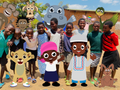
Ubongo’s solution is African‑made, localized “edutainment” delivered at massive scale through TV, radio, and digital platforms, designed to be both fun and educational. They create shows like “Akili and Me” and “Ubongo Kids” that embed curriculum‑aligned content, social and emotional learning, gender‑equity messages, and life skills into stories, songs, and characters that children love, and then distribute this content in multiple languages across the continent. Their theory of change is that consistent exposure to this content will build foundational skills, shift attitudes and behaviors (among both kids and caregivers), and eventually help children succeed in school and life.
Key Outputs
Key outputs that frame Ubongo’s work:
- Reach: the 2021 report notes over 24 million families reached, and recent documents describe continued expansion across African countries through TV, radio, and digital platforms.
- Content portfolio: Ubongo produces multiple series (Akili and Me for early childhood, Ubongo Kids for primary‑age STEM and life skills, and other themed content like financial literacy and gender equity).
- Languages and localization: they localize content into multiple African languages and tailor stories to local contexts, with their learning report highlighting co‑creation and testing with kids.
- Strategic learning agenda: the 2024–2028 strategic plan explicitly ties research priorities to assumptions in their theory of change and lays out learning questions to guide future evaluations.
These outputs show a mature content and distribution engine, underpinned by a conscious effort to connect activities back to their theory of change.
Key Intermediate Outcomes
Intermediate outcomes with measured changes (and counterfactual evidence where available):
- Early‑learning and school‑readiness skills: the “Akili and Me” impact study in Tanzania (568 children) found significant improvements in early‑learning and school‑readiness skills for children exposed to the program compared with comparison groups.
- Foundational literacy, numeracy, and STEM engagement: Ubongo’s impact page and associated studies report improved learning outcomes in literacy and numeracy, and increased STEM interest and understanding among children who watch Ubongo Kids and related content.
- Financial literacy and life skills: the Spring evaluation shows that Ubongo’s financial‑literacy episodes significantly improved financial knowledge, learning outcomes, and aspects of wellbeing for adolescent girls compared with comparison groups.
- Caregiver behaviors and home‑learning support: evaluations indicate positive behavioral change among caregivers, greater use of educational content with children, more positive parenting practices, and increased support for learning at home, though methods vary across studies.
These changes in knowledge, skills, attitudes, and behaviors expand future options and are supported by quasi‑experimental or RCT‑style evidence in several key domains.
Key Ultimate Outcomes
On ultimate outcomes, Ubongo is still in the early stages:
- Education and life‑course outcomes: Ubongo’s vision and narrative link improved foundational skills and mindsets to long‑term educational success, economic opportunity, and better life outcomes, but there are no studies yet tracking school completion, earnings, or wellbeing for Ubongo viewers.
- Population‑level and SDG progress: strategic documents and impact pages emphasize contribution to SDG 4 and 5, but there is no direct, counterfactual analysis of national or regional SDG indicator shifts attributable to Ubongo content.
Continual Learning & Adaptation
Ubongo demonstrates many features of a learning organization aligned with our four‑step cycle:
- Learning reports and culture: the Ubongo Learning Report explicitly reflects on successes and failures, stating that Ubongo must “always be learning,” and describes how feedback from kids and partners informs content and strategy.
- Theory‑of‑change‑driven research: the 2024–2028 Strategic Plan says research priorities are driven by learning questions tied to assumptions in their Theory of Change, indicating that evidence is being used to test and refine the causal chain rather than simply prove success.
- Adaptive partnerships and content: Ubongo engages in partnerships like PlayMatters and U‑Report to test content in new settings (e.g., crisis‑affected contexts) and adjust formats, languages, and themes based on what they learn from impact studies and user feedback.
In our four‑step cycle, Ubongo is strong on problem grounding, ToC‑aligned implementation, and intermediate‑outcome measurement (including counterfactuals in several domains), with a clear commitment to learning and adaptation.
Written by