
Our Recommendation
Suvita is a strong children's health organization due to its cost‑effective, evidence‑grounded immunization “last‑mile” work with genuine randomized controlled trial backing for its core approach. Its model directly replicates and scales a Nobel Prize‑winning randomized controlled trial on immunization ambassadors and SMS reminders. Independent reviewers report around 25% increases in vaccination rates.
Suvita's Fierce Certification score is 90 points (base of 100; maximum of 120) based on our criteria:
✔ Has Ultimate Outcome Goals (50 pts)
✔ Measures Intermediate Outcomes (10 pts)
✔ Measures Ultimate Outcomes (0 pts)
✔ Shows Continual Learning & Adaptation (20 pts)
✔ Measures Intermediate Counterfactual (10 pts)
✔ Measures Ultimate Counterfactual (0 pts)
The Social Problem
Suvita is tackling the persistent drop‑off and under‑completion of routine childhood vaccination schedules in India, which leaves millions of children unprotected against preventable diseases. Despite free government‑provided vaccines, many children miss doses or never complete the schedule due to forgetfulness, lack of clear reminders, low awareness, and social and logistical barriers in states like Bihar and Maharashtra. This under‑vaccination leads to higher incidence of vaccine‑preventable diseases, preventable child deaths, and ongoing health and economic burdens for families and communities.
The Solution
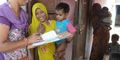
Suvita’s solution combines low‑cost, personalized SMS reminders with community immunization ambassadors to nudge caregivers to complete their children’s routine vaccines. They send tailored SMS reminders to caregivers when a child is due for a vaccine and, in parallel, identify and recruit local opinion leaders as volunteer ambassadors, who share clinic schedules and encourage families in their social networks to attend immunisation sessions. This model is directly inspired by the randomized controlled trial by Banerjee, which showed that using local “gossip” influencers and incentives greatly increased full vaccination, and Suvita’s theory of change is that replicating these mechanisms at scale will raise coverage, reduce drop‑off, and ultimately prevent disease and death.
Key Outputs
Key outputs that frame Suvita’s work:
- Scale of reach: Suvita has scaled its SMS program to reach more than 3 million children and pregnant women in Indian states such as Bihar and Maharashtra, and has recruited a network of over 7,000 volunteer immunization ambassadors.
- Embedded partnerships: It collaborates with public‑health authorities to integrate its reminders and ambassador activities into the government immunization system, rather than running parallel services.
- Data and systems upgrades: Through the data.org capacity‑building project, Suvita has improved data workflows, built metrics for ambassador recruitment, and laid the groundwork for an A/B‑testing platform to evaluate program variants more systematically.
These outputs show a lean, system‑integrated organization using behavioral science and data tools for immunization.
Key Intermediate Outcomes
Intermediate outcomes with evidence:
- Increased vaccination coverage: External evaluations (summarized by Impactful Giving and MIT Solve) report that interventions based on Suvita’s approach increase vaccination rates by around 25% relative to control groups, confirming that the model substantially reduces under‑vaccination.
- Reduced drop‑off between doses: Suvita targets drop‑off between initial and subsequent doses. The RCTs underpinning its approach specifically measured improved completion of full immunization schedules, which is an intermediate behavioral outcome.
- Efficient use of local influencers: The immunization ambassador program, adapted from the Banerjee trial, demonstrates that mobilizing identified opinion leaders can effectively change health behavior at low cost, and Suvita has replicated this at scale.
Key Ultimate Outcomes
Ultimate outcomes are largely inferred:
- Disease and mortality outcomes: Suvita’s mission is to prevent disease and save lives through vaccines, and the broader evidence base for routine immunization clearly links higher coverage to lower mortality and morbidity, but Suvita has not yet reported disease‑incidence or child‑mortality outcomes specific to its programs.
- Economic and developmental outcomes: Their information notes that vaccines improve social and economic outcomes by preventing illness, but there is no Suvita specific ultimate outcome tracking.
Continual Learning & Adaptation
Suvita appears to have a reflective, evidence‑driven learning culture:
- Evidence‑first founding: The founders explicitly chose their model after evaluating the Banerjee randomized controlled trial, and Suvita continues to see itself as scaling a proven approach, not inventing from scratch.
- Data‑driven improvement: Through the India Data Capacity Accelerator and data.org collaboration, Suvita has improved its data workflows and is preparing for ongoing program evaluations and A/B tests to refine targeting, messaging, and ambassador recruitment methods.
- Values that emphasise learning: Suvita’s values stress “Think. Then act.” and being humble, explicitly committing to using rigorous analysis to inform decisions, acting on imperfect information, and adjusting course as they learn more.
Within our four‑step cycle, Suvita is particularly strong at grounding its theory of change in a specific negative‑consequence chain (under‑vaccination → disease and death), implementing interventions tightly aligned with that chain, and using high‑quality counterfactual evidence on intermediate outcomes, while beginning to invest in the systems needed to deepen measurement and learning as it scales.
Written by