
Our Recommendation
Imagine Worldwide is a high‑promise, evidence‑oriented, learning organization that meets our bar on rigorous counterfactual evidence for key intermediate outcomes (literacy and numeracy), with a scalable delivery model tailored to extremely low‑resource African contexts.
Imagine Worldwide's Fierce Certification score is 90/100 based on our criteria:
✔ Has Ultimate Outcome Goals (50 pts)
✔ Measures Intermediate Outcomes (10 pts)
✔ Measures Ultimate Outcomes (0 pts)
✔ Shows Continual Learning & Adaptation (20 pts)
✔ Measures Intermediate Counterfactual (10 pts)
✔ Measures Ultimate Counterfactual (0 pts)
The Social Problem
Imagine Worldwide targets the global foundational‑learning crisis, with a focus on sub‑Saharan Africa where millions of children attend school but never learn to read or do basic math. Overcrowded classrooms, under‑resourced teachers, and a lack of appropriate materials mean that even when children are present, they often leave primary school without basic skills, wasting years of schooling and undermining future opportunities. This persistent learning deficit reduces lifetime earnings, reinforces poverty, and slows progress toward national education goals.
The Solution
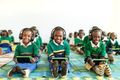
Their solution is child‑directed, tech‑enabled, foundational‑skills instruction: adaptive literacy and numeracy software delivered on solar‑powered tablets that work offline in challenging environments. Each child learns at their own level and pace using onebillion‑based software, while Imagine Worldwide and partners provide infrastructure (solar, devices), implementation support, and government capacity‑building so programs can be integrated into school systems. The theory of change is that by dramatically boosting foundational literacy and numeracy at low cost per child and in places where traditional schooling is weakest Imagine will unlock downstream gains in health, income, and intergenerational opportunity.
Key Outputs
Key outputs that frame Imagine’s work:
- Reach and geography: Imagine currently serves elementary‑aged children in at least seven countries (Burkina Faso, Ghana, Liberia, Malawi, Sierra Leone, Senegal, Tanzania) with programs anchored in public schools.
- Scale trajectory: a 2024 CGI commitment aims to provide 1 million primary‑school children in Sierra Leone and Tanzania with reading and math skills via Imagine’s model, building on earlier cohorts of tens of thousands of learners.
- RCT portfolio: Imagine highlights at least nine RCTs of the onebillion software in multiple countries and languages, including a two‑year Malawi RCT that demonstrated significant literacy and numeracy gains despite COVID disruptions.
- Delivery infrastructure: large‑scale procurement and installation of solar systems and tablets in off‑grid schools are documented in their annual reports.
These outputs show a relatively lean organization acting as a platform and systems partner, leveraging a strong evidence base for the core learning technology.
Key Intermediate Outcomes
Intermediate outcomes with strong measurement and counterfactual evidence:
- Literacy and numeracy gains: across nine RCTs, children using onebillion’s software (implemented by Imagine and partners) show significantly greater gains in reading and math than comparable children in control groups, including over two years in Malawi during pandemic disruptions.
- Increased effective learning time and engagement: program reports and partner updates describe improvements in engagement, with children spending structured time on tablets and demonstrating measurable skill progression that would otherwise be unlikely given classroom constraints.
- Access to effective EdTech in low‑resource settings: Imagine has proven that fully offline, solar‑powered tablets with adaptive software can be deployed and used at scale in off‑grid, low‑connectivity schools.
These are among the strongest RCT‑backed intermediate results in the foundational‑learning space.
Key Ultimate Outcomes
On ultimate outcomes, Imagine is still largely relying on the broader evidence that foundational skills lead to better lives:
- Economic and wellbeing outcomes: Imagine repeatedly emphasizes that higher literacy and numeracy improve health, wealth, and social outcomes, but it does not yet track earnings, poverty status, or wellbeing for its students.
- Intergenerational and macro impacts: their narrative highlights intergenerational benefits and economic growth as consequences of improved foundational learning, but they have not yet built longitudinal or macro‑level counterfactual studies into their own measurement strategy.
Continual Learning & Adaptation
Imagine Worldwide demonstrates a strong orientation toward learning and adaptation:
- Evidence‑first positioning: they highlight that only a small share of EdTech solutions demonstrate real impact and explicitly differentiate themselves by grounding decisions in RCTs and ongoing evaluations of learning outcomes.
- Iterative program and systems design: Imagine uses findings from RCTs and pilots to refine implementation models, adapt software deployment in new countries, and work increasingly through governments for long‑term sustainability.
- Partnerships for MEAL and systems change: as part of UNESCO’s Global Education Coalition and other partnerships, they share lessons on Monitoring, Evaluation, Accountability, and Learning, solar infrastructure, and foundational learning, contributing to field‑level learning as well as internal improvement.
Relative to our four‑step cycle, Imagine is unusually strong on intermediate‑outcome measurement with counterfactuals and is building solid government‑partnership models, while still needing to extend its learning agenda into ultimate outcomes (and potentially simple, right‑sized quasi‑experimental follow‑ups on cohorts over time).
Written by